Panama Pensionado: Permanent Residency for Retirees
Panama’s Pensionado program grants permanent residency for $1,000/month in lifetime pension — plus legally mandated discounts on healthcare, dining, and utilities.
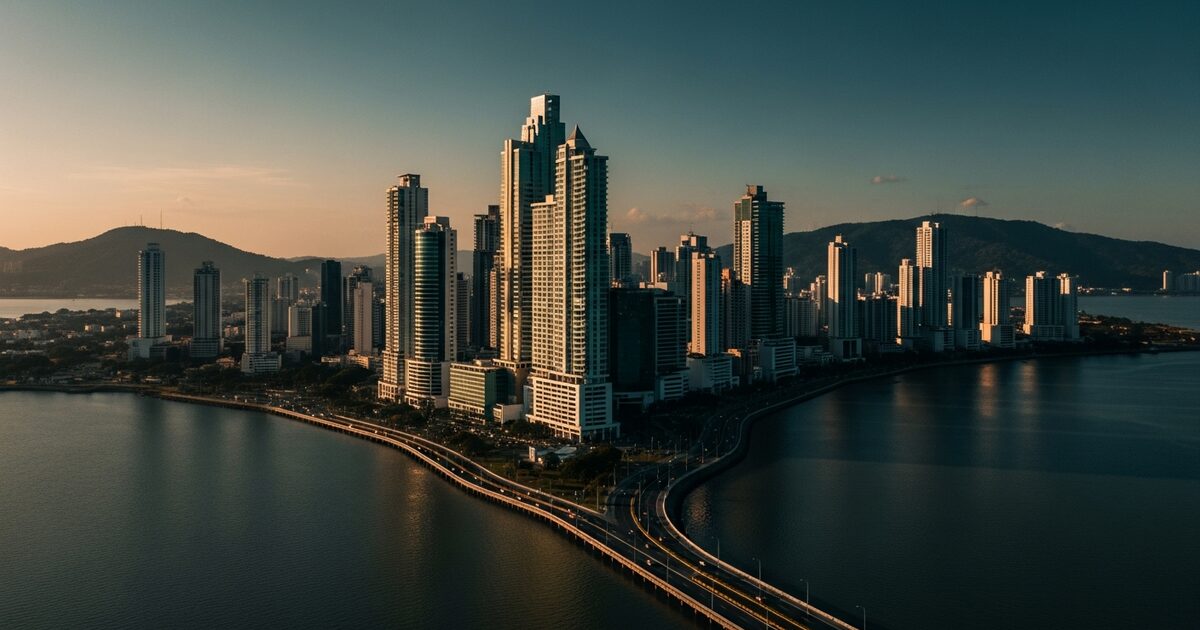
- Panama’s Pensionado program grants permanent residency to anyone with a lifetime pension of at least $1,000/month — US Social Security alone qualifies most American retirees.
- Law 6 of 1987 mandates discounts of 15–50% on healthcare, restaurants, utilities, entertainment, and airline tickets for all Pensionado cardholders nationwide.
- Panama uses the US dollar as its official currency, eliminating exchange rate risk on Social Security and pension income deposited into local accounts.
- There is no US-Panama income tax treaty; US citizens must still file and pay US taxes on worldwide income, and FBAR applies if Panama accounts exceed $10,000 at any point during the year.
- Processing the Pensionado program application typically takes 3–6 months and requires two in-person trips to Panama City; attorney fees run $1,300–$2,500 plus document costs.
- Original Medicare does not cover care outside the US; retirees moving to Panama must purchase a private health policy and plan carefully around Part B enrollment to avoid a permanent 10% premium penalty per gap year.
Disclosure: this article contains affiliate links. If you open an account through one of them, Cashflow Abroad may earn a referral commission at no extra cost to you.
Panama's Pensionado program hands you immediate permanent residency in exchange for one thing: proof of a lifetime pension paying at least $1,000 per month. Social Security alone qualifies most American retirees. What catches people off guard is that the visa comes bundled with a legally mandated discount package — codified in Law 6 of 1987 — that cuts 15 to 50 percent off healthcare, restaurants, utilities, entertainment, and airline tickets nationwide. Businesses are required by law to honor these discounts whether you're in Panama City or a mountain village three hours away.
This guide covers who qualifies, what the application process looks like, what your US tax and banking obligations remain, and the real monthly costs across Panama's most popular expat destinations.
What the Pensionado Visa Actually Gives You
Unlike a temporary residency that you renew every year or two, the Pensionado visa grants permanent residency on approval. There is no renewal cycle. Your spouse and unmarried dependents under 25 can be included on the same application, provided you add $250 per month in qualifying income per dependent.
After five years of permanent residency, you become eligible to apply for Panamanian citizenship, which includes a Panamanian passport. Panama allows dual citizenship, so you do not have to relinquish your US passport. Naturalization costs are modest — typically under $1,000 in fees — compared to citizenship-by-investment programs that require $100,000 or more.
Panama uses the US dollar as its official currency. Your Social Security check, pension deposit, or 401(k) distribution arrives in the same currency you spend locally. No exchange rate risk and no currency conversion cost — a concrete advantage over European or Southeast Asian retirement destinations that require managing a local currency.
Income Requirements: Who Qualifies
The Pensionado visa requires a guaranteed lifetime income of at least $1,000 per month. If you purchase a property in Panama worth at least $100,000, the threshold drops to $750 per month. The income must be permanent — the supporting letter must explicitly state that payments continue for the lifetime of the recipient.
| Situation | Monthly Income Required |
|---|---|
| Single applicant, no Panama property | $1,000/month lifetime pension |
| Single applicant + $100K+ Panama property purchase | $750/month lifetime pension |
| Applicant + spouse | $1,250/month ($1,000 base + $250 per dependent) |
| Applicant + spouse + one dependent child | $1,500/month ($1,000 + $250 + $250) |
Qualifying income sources include US Social Security retirement benefits, US military or federal government pensions (FERS, CSRS), state government pensions, private defined-benefit pensions, and annuities structured to pay for life. As of mid-2026, the average US Social Security retirement benefit is approximately $1,907 per month, which clears the $1,000 threshold on its own for most single applicants. Couples may qualify on one spouse's benefit alone.
The application requires an official benefit verification letter from the paying institution. For Social Security, the Social Security Administration issues benefit verification letters online through your My Social Security account. This letter must be apostilled under the Hague Convention and then translated into Spanish by a certified Panamanian public translator before it can be accepted by immigration authorities.
Income sources that typically do not qualify on their own include 401(k) or IRA withdrawals (not guaranteed for life), dividend income, rental income, or portfolio distributions. If your retirement income is primarily portfolio-based rather than pension-based, a deferred income annuity can sometimes be structured to meet the lifetime income requirement — confirm with a licensed immigration attorney before assuming your income qualifies.

The Law 6 Discount Package: Exact Percentages
Panama's Law 6 of 1987 establishes a set of mandatory discounts that businesses across Panama must provide to Pensionado cardholders. These are not optional senior discounts — they are legally enforceable and apply at hotels, restaurants, pharmacies, airlines, utility companies, and hospitals throughout the country.
| Category | Discount | Applies To |
|---|---|---|
| Entertainment (theaters, cinemas, concerts) | 50% | All venues nationwide |
| Hotels (Monday through Thursday) | 50% | Weekday stays only |
| Airline tickets | 25% | Copa Airlines and qualifying domestic routes |
| Restaurant meals | 25% | Sit-down restaurants |
| Utilities (electricity, water, phone) | 25% | Monthly residential bills |
| Medical consultations and specialist visits | 20% | Private doctors and clinics |
| Hospital bills (inpatient) | 15% | Private hospital stays |
| Prescription medications | 10% | Licensed pharmacies |
| Public transportation | 50% | Metro and bus in Panama City |
Utilities at $150/month → save $37.50. Two restaurant meals per week averaging $45 → save $90/month. One specialist visit per month at $120 → save $24. Two round-trip Copa flights to Miami per year at $400 → save $200/month averaged. Conservative total: $350–$500+ per month in mandated discounts, on top of Panama's already lower baseline costs compared to the US.
Application Process: Six Steps
All Pensionado applications must be filed through a licensed Panamanian immigration attorney. Self-filing is not permitted. Budget $1,300 to $2,500 for attorney fees, plus $300 to $600 for document preparation, apostilles, notarizations, certified translations, and government filing fees. Plan on two in-person trips to Panama: one to submit your application and receive a provisional residence card, and a second trip three to six months later to collect your permanent card.
- Gather and apostille US documents. Your valid passport, official pension or Social Security benefit letter stating lifetime income, an FBI background check or state police clearance, and any dependent documentation. All foreign documents must be apostilled under the Hague Convention before use in Panama. The US State Department processes apostilles for federal documents; most states have their own process for state-issued documents.
- Engage a licensed Panamanian immigration attorney. Your attorney manages the filing logistics, arranges certified Spanish translations, and represents you at the National Immigration Service. Fees typically range from $1,300 to $2,500 depending on the firm and scope of services included.
- Obtain a Panamanian health certificate. A medical exam performed by a licensed Panamanian doctor, valid within 90 days of your application filing date. This is completed during your first trip to Panama.
- File at the National Immigration Service (SNM) in Panama City. Your attorney submits the complete apostilled and translated package on your behalf. You receive a provisional residence card that allows you to remain in Panama while the application is processed.
- Wait for approval. Processing typically takes 3 to 6 months from filing, with complex or incomplete applications extending to 10 months. Your attorney tracks status and handles any requests for additional documentation.
- Return to collect your permanent residence card. A second in-person visit to Panama is generally required. Once issued, your Pensionado card activates the Law 6 discount entitlements permanently.
For US consular support during your time in Panama — including passport renewals, emergency assistance, and notarial services — the US Embassy in Panama City maintains a citizen services page with current office hours and appointment procedures.
Where to Live: Four Destination Tiers

Panama's geography offers multiple distinct cost and lifestyle tiers within a few hours of each other. Panama City is a fully modern capital with international hospitals, direct flights to US hubs, and a mature expat infrastructure. The highland and coastal towns offer significantly lower costs and a slower pace, with tradeoffs in healthcare access and daily services.
| Location | Monthly Budget (Couple) | Best For | Main Tradeoff |
|---|---|---|---|
| Panama City | $2,000–$2,800 | Modern amenities, internationally accredited hospitals, direct US flights under 3 hours to Miami | Tropical heat year-round, traffic congestion, higher rent than interior |
| Boquete (Chiriquí highlands) | $1,400–$2,000 | Cool climate at 3,900 ft elevation, large English-speaking expat community, mountain scenery | 3 hours from Panama City; serious medical care requires travel to David or the capital |
| Coronado (Pacific coast) | $1,500–$2,200 | Beach lifestyle 90 minutes from Panama City, established expat community and services | Seasonal heavy rainfall, some petty crime in coastal areas |
| Bocas del Toro (Caribbean islands) | $1,500–$2,500 | Island setting, relaxed pace, low cost for a basic lifestyle | Very remote, limited healthcare infrastructure, persistent rainfall |
These monthly budgets include rent ($600–$1,200 depending on location and unit size), groceries, utilities, transportation, dining out twice weekly, and a basic health insurance policy. They do not include one-time setup costs — immigration fees, shipping, furniture — or annual flights home to the US. For a broader comparison of where Social Security and pension income stretches furthest globally, the geographic arbitrage playbook covers ten destinations with comparable budget breakdowns.
US Tax Reality: What Changes and What Doesn't
Moving to Panama does not reduce your US tax obligation. US citizens are taxed on worldwide income regardless of where they live. What Panama removes is a second country's tax layer on your foreign-source income — but your IRS filing continues exactly as it did when you lived in the United States.
There is no US-Panama income tax treaty. This means you cannot rely on treaty tie-breaker rules for residency determination or claim reduced withholding rates on US-source income. The main tools available are the Foreign Earned Income Exclusion (FEIE) for active earned income and the Foreign Tax Credit (Form 1116) for Panamanian taxes paid on any Panama-source income. For most retirees whose primary income is Social Security, pension distributions, or IRA withdrawals — all US-source — the FEIE does not apply, and the Foreign Tax Credit has limited relevance unless you earn Panama-source rental or business income locally.
FBAR and FATCA: Reporting Your Panama Accounts
Opening a local bank account in Panama — which you will almost certainly need for utility bills and local expenses — triggers US reporting obligations if your balances cross certain thresholds.
The FBAR (FinCEN Form 114) is required if the aggregate balance of all your foreign financial accounts exceeds $10,000 at any point during the calendar year. It is filed separately from your tax return through FinCEN's BSA E-Filing system, with a deadline of April 15 and an automatic extension to October 15. As of 2026, non-willful failure to file carries penalties up to $16,536 per violation; willful violations can reach $165,353 per violation or 50% of the account balance, whichever is greater.
Separately, if your specified foreign financial assets exceed $200,000 on December 31 (single filer abroad) or $300,000 at any point during the year, you must also file Form 8938 (Statement of Specified Foreign Financial Assets) with your annual return. These two forms have different thresholds, cover different asset types, and are submitted to separate federal bodies — filing the FBAR does not satisfy Form 8938, and vice versa.
Banking in Panama as a US Citizen
Panama's banking sector is large, well-capitalized, and fully dollarized, with over 80 licensed banks including international institutions. The challenge for American residents is FATCA compliance. Panamanian banks that accept US account holders must report account balances and income to the IRS and collect a completed W-9 from each American client. Some banks have responded by declining US applicants; others accept Americans who hold legal Panamanian residency and can document US tax compliance history.
The most reliable approach: maintain a US-based account for receiving Social Security and pension income, then wire funds to Panama as needed. For the US side, Charles Schwab's international checking account reimburses all ATM fees worldwide and charges no foreign transaction fees, which keeps your US account fully functional at Panamanian ATMs without per-withdrawal costs.
Since Panama is a dollarized economy, moving money between a US dollar account and a Panamanian bank account does not involve currency exchange. The main cost is the wire transfer fee itself. For details on minimizing transfer costs in general, the expat money transfer guide covers the main options — though the absence of an exchange rate spread in Panama simplifies the math compared to most other countries.
Data note: banking policies on US client acceptance in Panama change regularly. Verify directly with your chosen bank before relocating. As of June 2026, several major Panama City banks and international institutions accept US Pensionado residents with complete documentation.
Healthcare: Quality, Costs, and Insurance Options
Panama has the most developed healthcare system in Central America. Panama City's private hospitals are internationally accredited and staffed by physicians trained in the US and Europe. Procedures cost a fraction of comparable US care: a specialist consultation at a private Panama City clinic runs $50–$150, and elective surgeries that cost $30,000–$50,000 in the US often run $8,000–$15,000 in Panama at comparable quality facilities.
Private health insurance in Panama falls into two main tiers:
- Local Panamanian policy: $100–$175 per month per person if you apply before age 64. Covers in-country care at private hospitals. Pre-existing conditions may carry waiting periods or premium loadings. These policies do not cover care in the United States.
- International policy: $150–$500 per month depending on age, deductible, and whether the plan includes a US care option. More flexible if you travel back to the US regularly for check-ups or specialist care.
Without any policy, basic care is still accessible — walk-in consultations at many Panama City clinics cost $20–$50. For a detailed breakdown of how international health insurance plans are structured — deductibles, coverage limits, evacuation riders, and pre-existing condition handling — the expat health insurance guide covers the main policy types used by long-term expats.
Retirees in Boquete or Coronado typically use Panama City or the regional hub of David for anything beyond routine care. The drive from Boquete to David is roughly 45 minutes; Panama City is about 5 hours by road or a short Copa domestic flight.
Practical Verdict for US Retirees
Panama's Pensionado visa is the most accessible path to permanent residency in Latin America for retirees with a qualifying lifetime income. The $1,000/month threshold is reachable for most Americans on Social Security. The Law 6 discount package cuts ongoing costs across most spending categories. The USD economy eliminates currency friction entirely. The territorial tax system removes a second layer of taxation on US-source retirement income. And the healthcare quality-to-cost ratio is among the strongest in the region.
The friction is administrative. A licensed attorney is required, documents need apostilles, and two in-person trips to Panama City are part of the process. The US tax filing obligation continues unchanged — FBAR and potentially Form 8938 apply to your Panama accounts. The Medicare enrollment decision needs careful thought before you leave the United States, not after you arrive.
Retirees who want a lower monthly cost, no Panamanian income tax on US retirement income, modern infrastructure in the capital, and a flight back to the US under five hours will find Panama a strong structural fit. For retirees weighing Panama against other low-cost destinations, the comparison belongs in the broader retirement planning conversation alongside healthcare access, estate planning, and Social Security optimization — topics covered in the full retirement abroad guide.
Disclaimer: This article is for general informational purposes only and does not constitute legal, tax, or immigration advice. Immigration rules, pension thresholds, and US tax law change. Verify current requirements with a licensed Panamanian immigration attorney and a US-licensed CPA or expat tax professional (EA or CPA) specializing in expatriate taxation before making any relocation decisions.
Sources checked June 2026: Social Security Administration (ssa.gov), FinCEN BSA E-Filing (fincen.gov), IRS Form 8938 documentation (irs.gov), US Embassy Panama (pa.usembassy.gov), Panama Law 6 of 1987, Panama National Immigration Service (SNM).
Frequently asked questions
Does US Social Security income qualify for the Panama Pensionado program?
Yes. US Social Security retirement benefits count as qualifying lifetime income. You need an official benefit verification letter from the SSA stating your monthly payment. Most Americans receiving more than $1,000/month in Social Security qualify on that benefit alone.
Do I still pay US taxes if I move to Panama?
Yes. US citizens are taxed on worldwide income regardless of where they live. Panama’s territorial tax system means Panama will not tax your foreign-source income, but you still file and pay US taxes. There is no US-Panama tax treaty, so you rely on the Foreign Tax Credit or FEIE rather than treaty protections.
What happens to my Medicare coverage if I retire to Panama?
Original Medicare does not cover medical care in Panama. You would use a private local or international health insurance plan for routine care. If you delay re-enrolling in Part B when you return to the US, you owe a permanent 10% premium surcharge per 12-month gap period, which adds significantly to lifetime premium costs.
Can I open a bank account in Panama as a US citizen?
Yes, but FATCA creates friction. Panamanian banks that accept US clients must report account information to the IRS and collect a W-9. Some banks decline Americans entirely. Having legal Pensionado residency status and complete US tax documentation significantly improves your approval odds at major Panama City banks.
How long does it take to complete the Panama Pensionado application process?
Processing typically takes 3 to 6 months after you submit your application, though complex cases can take up to 10 months. Plan for two trips to Panama: one to submit apostilled documents and get a provisional card, and a second trip to collect your permanent residency card once approved.
This guide is general information, not personalized tax, legal, or investment advice. Rules change; verify current thresholds with official sources or a qualified professional before acting.
Related guides
 Retirement AbroadMarch 31, 2026
The $500/Month Retirement: 10 Countries Where Social Security Goes 5x Further
The average Social Security benefit in 2025 is approximately $1,907/month . Here are the 10 best countries where your Social Security goes 3-5x
 Retirement AbroadSeptember 1, 2026
SSA 45-Hour Work Test Stops Expat Benefits
Claiming SSA at 62 while working overseas can wipe a full month of benefits after 45 hours. Check which work test applies before you file.
 Retirement AbroadAugust 26, 2026
UK State Pension on Your Form 1040
Convert every UK State Pension payment to dollars, put the full amount on Form 1040, and use the treaty so the UK does not tax you twice.