AI Solar Permit Desk for US Installers
Sell $99–$149 AI solar permit packets to US installers from abroad. Stack OpenSolar, n8n, and Claude for under $80/month without PE stamps.
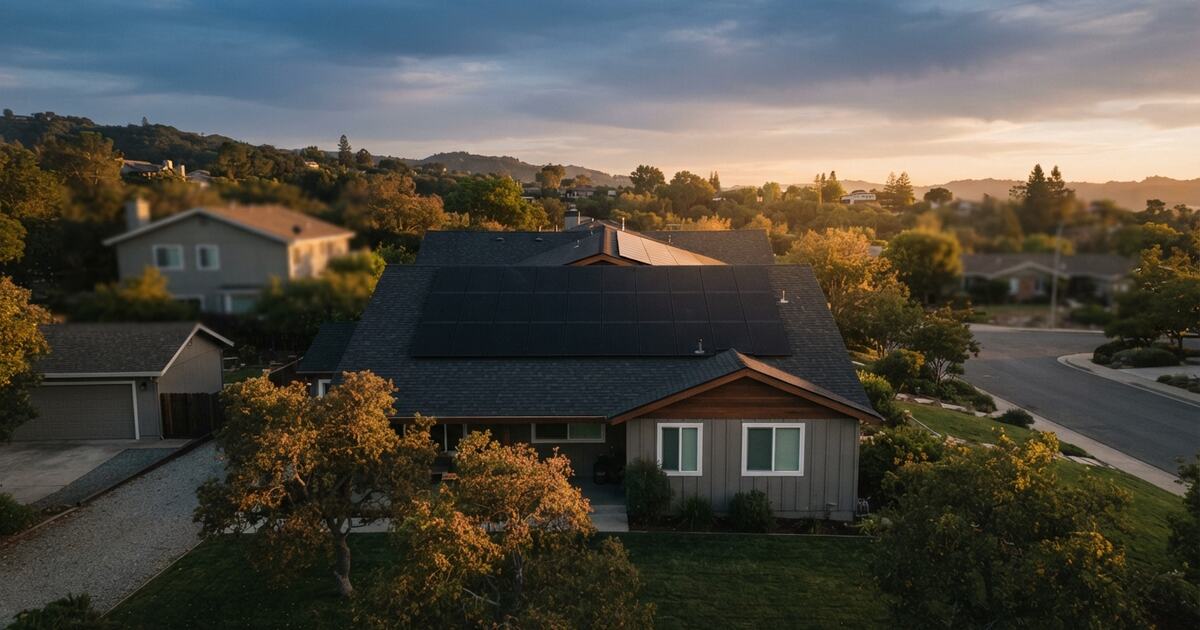
- Solar Permit Services charges a flat $275 PV package up to 15.0 kW DC; PE-stamped residential sets are commonly $1,200 and up, so a $99–$149 assembly desk undercuts the paperwork layer without selling stamps.
- As of 6 July 2026, SolarAPP+ charges installers $35 for a solar permit admin fee and $30 for storage, plus the AHJ’s own permit fee; the first three revisions are free.
- Aurora Solar Basic is $159 per user per month billed monthly ($135 annually) with a 50-project cap — bill the seat through or work from the client’s PDF export.
- Claude Haiku 4.5 is $1/$5 per million tokens; a cached AHJ checklist job often costs $0.15–$0.40, which is noise against a $125 packet.
- US citizens still owe self-employment tax on sole-prop packet income even if Form 2555 excludes income tax; price the 15.3 percent into the retainer.
Disclosure: this article contains affiliate links. If you open an account through one of them, Cashflow Abroad may earn a referral commission at no extra cost to you.
A typical US solar shop already pays $275 for a remote PV packet up to 15.0 kW DC, and PE-stamped sets run $1,200 and up. You do not need that license. Sell the assembly-and-filing desk — AHJ checklists, SolarAPP+ data entry, spec-sheet packs, and utility interconnection drafts — at $99–$149 per job and run the stack for under $80 a month from a low-cost city while the installer keeps the PE stamp and the contractor of record.
SEIA and Wood Mackenzie counted 4,647 MWdc of US residential solar in 2025, then cut the 2026 residential outlook by about 21 percent after the Section 25D customer credit window. Crews that survive still cannot flip a breaker until the city packet and the utility interconnection file are clean. That paperwork desk is the offer. It sits in the same AI Income & Cash Flow cluster as other US-side document desks, and it is a cousin of the construction closeout work in the AI pay-app desk for US subcontractors — same buyer psychology, different forms.
What you sell, and who writes the check
Sell a named product, not “AI for solar.” The SKU is a permit-ready packet plus interconnection draft for a single residential rooftop, solar-only or solar-plus-storage, in one named AHJ and one named utility. You never stamp plans. You never call yourself the engineer of record. You assemble, check, fill, and track.
The buyer is a 8–40 job/month installer, not Sunrun
Target the operations owner or permit coordinator at a residential installer doing roughly 8–40 rooftops a month in Florida, Texas, Arizona, North Carolina, or the remaining California volume. National TPO machines have in-house CAD. The shop you want has one overloaded coordinator, a GreenLancer or local PE on speed dial, and a crew sitting on a roof while the city portal kicks the file back for a missing cut sheet.
That buyer already understands third-party packets. Solar Permit Services publishes a flat $275 PV package up to 15.0 kW DC. Solar Permit Solutions lists PE-stamped residential sets at $1,200 up to 20 kW. EnersolConnect add-ons show +$600 for permit submission and +$400 for interconnection/PTO. Your desk undercuts the assembly layer and leaves the stamp to whoever already holds the license.
To test whether US installers will even reply, post the offer as a free listing on Brixaz and see who contacts you. Listings are free and early; treat the first ten replies as interviews, not as a full book of business.
What is actually in a residential solar packet?
A city building department (the AHJ) wants a complete, internally consistent file. The utility wants a second, overlapping file for interconnection and Permission to Operate. Most first-time resubmittals happen because those two files disagree on inverter model, busbar rating, or storage interconnection type.
AHJ permit versus utility interconnection
Keep two folders per job. Mixing them is how you ship a city cover sheet with a utility single-line that still shows last week’s microinverter.
| Deliverable | Who consumes it | Your work | Not your work |
|---|---|---|---|
| Site plan, roof layout, fire setbacks | AHJ plans examiner | Export from OpenSolar or the client’s Aurora seat; check labels against the cut sheets | Original structural design or PE stamp |
| Single-line diagram and spec sheets | AHJ and utility | Bundle manufacturer PDFs; match model numbers to the BOM | Rewriting UL listings |
| AHJ application / SolarAPP+ | City or county portal | Fill every field; pay or flag the SolarAPP+ admin fee for the installer | Holding the contractor license |
| Interconnection / PTO packet | IOU or muni utility | Draft portal fields, SLD, equipment list, customer authorization | Utility engineering studies |
| Deficiency response | AHJ or utility reviewer | Map the comment to a page, rewrite the exhibit, resubmit log | Arguing code interpretations as a PE |
Where the AHJ has adopted SolarAPP+, NREL’s platform can issue an instant residential permit for compliant rooftop jobs. As of the SolarAPP+ knowledge-base update on 6 July 2026, installers pay a $35 admin fee for a solar permit, $30 for add-on energy storage or storage-only, plus the city’s own permit fee. The first three revisions are free. That fee is a pass-through on the installer’s card, not your margin.
Interconnection is the slower clock. Installer guides still treat a clean residential solar-only file as roughly 2–6 weeks through a large California IOU, with storage stretching longer when the file is incomplete. You cannot buy PTO. You can stop the 90-percent-error pattern that utilities complain about: mismatched nameplates, unsigned customer authorization, and SLDs that do not match the permit set.

Tool stack and what it costs to run
Do not buy an Aurora seat on day one. Aurora Basic is $159 per user per month billed monthly, or $135 billed annually, with a 50-project cap. Premium is $259 / $220. That is the installer’s design tool. You work from their PDF export, or you design inside OpenSolar’s core app, which stays free if you never turn on paid API Access or connectors (OpenSolar’s 16 April 2026 change).
Starter stack, as of August 2026
| Tool | Plan to start on | Published price | Role in the desk |
|---|---|---|---|
| OpenSolar | Core app, no API | $0 | Layouts and proposal exports when the client has no Aurora seat |
| Google Workspace | Business Starter, flexible | $8.40 per user per month | Job folders, shared Drive, client email |
| Airtable | Free | $0 (1,000 records/base, 5 editors) | Job tracker, AHJ checklist, status |
| n8n Cloud | Starter | €24 per month (2,500 executions) | Intake form → Drive folder → Slack ping → Claude extract |
| Claude API | Haiku 4.5 + Sonnet 5 | $1/$5 and $2/$10 per million tokens | Field extraction, cover-sheet drafts, deficiency replies |
| PandaDoc | Skip, or Starter annual | $0 with Google Docs, or $19 per user per month billed annually | Optional client SOW and change-order signatures |
| Mercury Bank | Business checking | $0 to open | USD invoices from US LLCs and installers |
Airtable Team is $24 per collaborator per month billed monthly, or $20 annually, with 50,000 records, if the Free cap starts to pinch. Stay on Free until you pass a few hundred jobs. Prompt-cache AHJ rule packs on Claude so the 20-page city checklist is not re-billed at full input rates every time; cache reads on Haiku 4.5 are $0.10 per million tokens.
20 packets × $125 = $2,500 revenue. Tools: Workspace $8.40 + n8n ~$26 + Claude ~$8 + domain/email leftovers ≈ $45–$70. Delivery: about 50–70 minutes per templated AHJ after week four ≈ 20–23 hours. Gross margin on software is above 95 percent. Your constraint is review hours, not GPUs. If you add a $159 Aurora seat because one client refuses to export PDFs, that single license wipes more than one packet of profit every month — bill it through as a line item or refuse the seat.
Park operating cash in Mercury Bank so installer ACH and card payouts land in USD while you live on local costs. If you later sweep surplus into a US brokerage, Charles Schwab is the usual expat-friendly path; that is treasury, not delivery.
How should you price the desk?
Price against the coordinator’s loaded hour and against the $275–$1,200 packet market, not against your API bill. A US permit coordinator at $28–$38 per hour loaded is already $50–$70 of labor on a messy first-time AHJ. Your $125 packet is cheaper than that hour pile and faster than a 3–5 day CAD house.
Three SKUs, one retainer
| SKU | Scope | Starter price | When to use it |
|---|---|---|---|
| AHJ packet only | Checklist, exhibits, SolarAPP+ or portal fill, two revision rounds | $99–$129 | Client already files interconnection in-house |
| Interconnection draft | Utility portal fields, SLD/BOM cross-check, customer auth checklist | $75–$99 | Add-on when PTO is the bottleneck |
| Combo job | Both files, one job number, shared BOM | $149–$189 | Default quote |
| Monthly desk | 20 combo jobs, Slack SLA, Friday aging report | $2,400–$3,200 | After three paid pilots with the same installer |
Charge a $35–$50 rush fee for same-business-day SolarAPP+ AHJs. Charge a deficiency round after the included two revisions at $40. Never include unlimited PE-driven redesigns. Put “no engineering stamp, no structural calcs, no contractor-of-record” in the first page of the SOW.
US-source income remains taxable to a US citizen abroad. The foreign earned income exclusion on Form 2555 can shelter qualifying earned income if you pass the tests, but it does not remove self-employment tax on a sole prop. Price that 15.3 percent into the retainer or run payroll through an S corp with a real wage — and read the self-employment tax trap for expat freelancers before you quote “tax-free because I left Texas.”
Fulfillment workflow you can run this week
Stand up the desk on one AHJ first. Pick a SolarAPP+ city or a Florida municipality with a PDF checklist, not a custom CAD AHJ. The first ten jobs teach the template; jobs 11–30 are where the margin shows up.
Week-one build
| Step | Action | Done when |
|---|---|---|
| 1 | Create a Drive folder template: 01-intake, 02-design-export, 03-cut-sheets, 04-ahj-forms, 05-utility, 06-deficiencies, 07-delivered | Copy-folder takes under a minute |
| 2 | Airtable base: Jobs, AHJs, Utilities, Equipment library, Deficiency log. Link AHJ to a long-text “required exhibits” field | One sample job row exists |
| 3 | Google Form or Tally: address, AHJ, utility, system kW, module/inverter/battery SKUs, Aurora/OpenSolar file link, photos of MSP and roof | n8n catches the webhook |
| 4 | n8n: create Drive folder, write Airtable row, Slack message with the job URL, run Claude Haiku to list missing intake fields | A test submit produces all four |
| 5 | Prompt pack: one system prompt per AHJ with the official checklist pasted once and cached; output JSON of field values plus a human cover memo | JSON validates against your schema |
| 6 | Human review: you open the SLD and the BOM and reject the job if they disagree | Written 10-minute QA checklist |
| 7 | Deliver a zip plus a one-page exception log. Installer submits with their license. You log portal timestamps | Client can file without asking you a question |
Use Haiku 4.5 for field extraction and Sonnet 5 when the AHJ comment is a code narrative. A cached 6,000-token checklist plus 2,000 tokens of job data and 1,500 tokens of JSON out on Haiku is roughly $0.02 before retries. Budget $0.15–$0.40 per live job once you count vision on blurry MSP photos and a second pass. That is still noise next to $125 of revenue.
For SolarAPP+ AHJs, the installer still pays the $35 / $30 admin fee on their card. Your job is a complete, internally consistent application so the instant-permit path does not collapse into a revision loop. NREL documents the program as an automated code-compliance path for standard rooftop jobs — not a substitute for a PE where the city still requires one.

What can go wrong, and how you stay in business
The failure modes are legal, operational, and seasonal. Price and contract for all three or the $2,500 month becomes a liability.
The expensive mistakes
- Practicing engineering without a license. If an AHJ requires a PE stamp, you broker a licensed engineer. You do not redraw rafters in CAD and call it “AI structural.”
- Holding yourself out as the contractor. Portal logins should be the installer’s. If a city requires the qualifier’s credentials, they click submit.
- BOM drift. Sales swapped the inverter after you packed the file. Your SLA should freeze the BOM at intake plus a paid change order.
- Utility deficiency loops. California Rule 21 interconnection is a utility process with its own clocks; see the CPUC interconnection page. You do not refund PTO delays caused by a complete file sitting in a queue.
- Volume cliff. SEIA’s Q2 2026 insight still points to a sharp residential contraction in 2026. Diversify across states. A Florida-only book dies with one AHJ rule change.
- Client data. Roof photos and utility bills are customer PII. Keep them in the installer’s Drive with your access, not in a personal Gmail scrape, and delete packs on a written retention schedule.
This is closer to a document ops desk than to a chatbot agency. If you already run report assembly for inspectors, the AI home-inspection report service is the same muscle: templates, QA, and a human who refuses to invent a number.
Ship one AHJ, then sell the retainer
The cash-flow lever is simple: dollar invoices, cheap living costs, and a product that replaces a US coordinator’s worst two hours without touching a PE stamp. Start with one SolarAPP+ jurisdiction or one PDF-checklist city, twenty jobs, and a written “no engineering” clause. When the Friday aging report is empty two weeks in a row, raise the price $20 and sell the monthly desk.
Do not wait for the residential market to “come back.” The shops that remain after a 21 percent volume cut still need packets. They will pay for a clean file. They will not pay you to be their engineer.
Data notes / Sources checked
Data note: software prices, SolarAPP+ fees, and SEIA volumes were checked in August 2026 and can change. Confirm live pricing pages before you quote a client.
- Aurora Solar pricing — Basic $159 monthly / $135 annual per user; Premium $259 / $220; 50 projects per month on self-serve.
- OpenSolar core app vs API Access — core platform remains free; API Access and connectors billed from 16 April 2026.
- SolarAPP+ installer admin fees — $35 solar, $30 storage, first three revisions free (updated 6 July 2026).
- U.S. Department of Energy SolarAPP+ overview — federal program background.
- Anthropic Claude API pricing — Haiku 4.5 $1/$5 per MTok; Sonnet 5 $2/$10 per MTok.
- Airtable pricing — Free 1,000 records; Team $20 per user per month billed annually.
- Airtable plans overview — Team $24 monthly / $20 annual per collaborator.
- n8n Cloud pricing — Starter typically €24 per month for 2,500 executions.
- Google Workspace billing — Business Starter $8.40 flexible / $7 annual per user per month.
- Solar Permit Services PV package — $275 flat up to 15.0 kW DC.
- Solar Permit Solutions plan-set pricing — $1,200 PE-stamped residential up to 20 kW.
- SEIA / Wood Mackenzie 2025 Year in Review — 4,647 MWdc residential in 2025; ~19–21% 2026 contraction in later updates.
- California PUC interconnection and permitting — Rule 21 context for IOU interconnection.
- IRS Form 2555 and IRS self-employment tax.
Frequently asked questions
Do I need a PE license to sell solar permit packets from abroad?
No, if you only assemble exhibits, fill portals, and draft deficiency replies. PE stamps, structural calcs, and contractor-of-record work stay with a licensed US engineer and the installer. Put that exclusion on page one of the SOW.
What should I charge a US residential solar installer per packet?
Quote $99–$129 for an AHJ packet with two revision rounds, $75–$99 for an interconnection draft, and $149–$189 for the combo. After three paid pilots, sell a 20-job monthly desk at $2,400–$3,200.
How much does the software stack cost each month?
A starter month is Google Workspace Business Starter at $8.40, n8n Cloud Starter at about €24, and a few dollars of Claude API. Skip Aurora unless the client pays the $159 seat. Airtable Free holds the first several hundred jobs.
Who pays the SolarAPP+ fee?
The installer pays it. As of 6 July 2026 the admin fee is $35 for a solar permit and $30 for storage, on top of the city’s permit fee. Your invoice is for assembly and data entry, not that pass-through.
This guide is general information, not personalized tax, legal, or investment advice. Rules change; verify current thresholds with official sources or a qualified professional before acting.
Related guides
 AI Income & Cash FlowOctober 13, 2026
AI Receptionist for Med Spas at $453.48
See the $453.48 month for a med spa AI receptionist, with the $297 HIPAA add-on that stays on and a $50 plan for the first 100 minutes.
 AI Income & Cash FlowOctober 8, 2026
AI for Vacation Rentals: Reply in 24 Hours
Answer Airbnb's 90% reply rule within 24 hours. See the $89 Hospitable bill and what to charge for a remote guest-message desk.
 AI Income & Cash FlowOctober 3, 2026
AI Receptionist for Insurance Agencies
Price an insurance-agency receptionist at $0.1078 a minute on Retell, plus a $2 number, and keep quotes with a licensed producer.