Mexico RFC for Banking
Set up Mexico RFC paperwork for bank accounts, leases, CFDI invoices, and U.S. foreign-account records before money starts moving.

- SAT says foreign individuals register for an RFC within one month of starting Mexico economic activity or when they need registration.
- SAT lists the foreign-person RFC trámite as free and gives a 40-minute maximum service duration with an appointment.
- If a SAT RFC filing is incomplete, the taxpayer has 10 days to complete information before the notice is treated as not presented.
- CFDI 4.0 invoice data can require receiver RFC, name, fiscal regime, fiscal postal code, and CFDI use.
- SEGOB says foreign temporary or permanent residents receive CURP when INM issues the NUE, and the resident document should contain it.
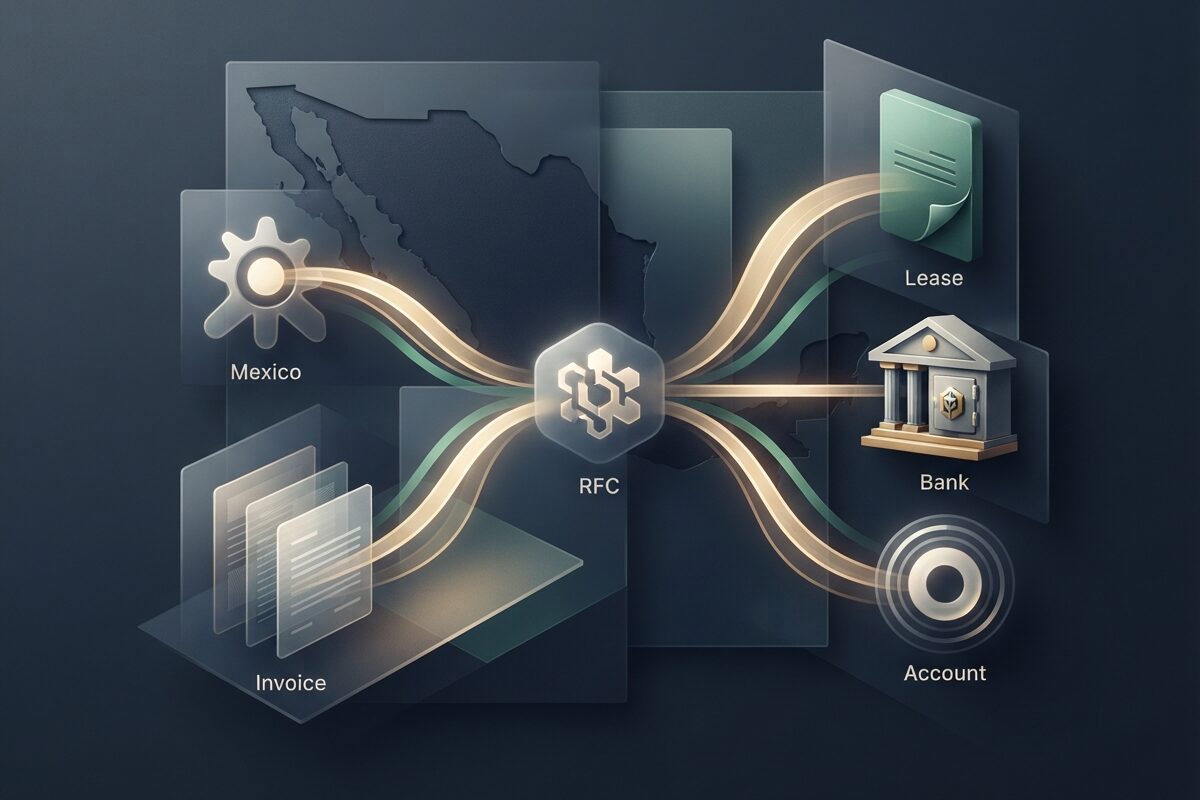
A missing RFC can turn a simple Mexico setup into a $0-progress day: no usable tax invoice, no clean landlord paperwork, and in many cases no full local banking setup. For U.S. expats and dollar earners moving to Mexico, the Registro Federal de Contribuyentes is not just a tax number; it is the identity key that connects SAT, invoices, banks, leases, and business paperwork.
This guide is for a beginner expat who has or is pursuing legal stay in Mexico and wants the practical cash-flow setup right. Retirees, families, and remote operators should still read it, because an RFC can affect rent documentation, reimbursable medical invoices, local bank access, and whether a Mexico activity quietly becomes a Mexico tax filing obligation.
Data note: SAT, SEGOB, IRS, and FinCEN pages were checked in August 2026. Mexico appointment availability, and CFDI rules can change, so verify the current SAT ficha before relying on a checklist.
Do expats in Mexico need an RFC?
Many expats in Mexico eventually need an RFC, even when they do not owe Mexican income tax yet. You are most likely to need one when you start a Mexico economic activity, request proper CFDI invoices, open or upgrade a local bank account, sign formal lease paperwork, buy property, or need a Constancia de Situacion Fiscal.
What the RFC actually is
The RFC is Mexico's federal taxpayer registration number administered by SAT. For foreign residents, it is the number that lets SAT connect your name, fiscal address, tax regime, obligations, and digital tax documents.
SAT's foreign-person registration page says the RFC process is for foreign individuals who need to register, and it states the filing window as within the month after starting economic activities or when the person needs to register in the federal taxpayer registry. The same SAT page lists the process as free and handled at SAT offices by appointment.
What it is not
An RFC is not proof that you are automatically a Mexico tax resident, and it is not a replacement for U.S. tax filing. It is also not a bank account, immigration status, or permission to work. Treat it as a required identifier that may unlock other processes, then separately analyze tax residency, work authorization, local-source income, and U.S. reporting.
One failed SAT appointment can cost a full workday, a rideshare each way, and a delayed bank or lease process. Spending 30 minutes pre-checking documents is usually cheaper than restarting.
Where the RFC shows up in real life
The RFC matters because Mexico has a highly digitized tax-document system. Even expenses that feel ordinary to an American renter or retiree can touch SAT data when a provider issues a CFDI, asks for your fiscal postal code, or requests your tax regime.
| Situation | Why the RFC matters | Cash-flow effect | Main caveat |
|---|---|---|---|
| Long-term apartment lease | Landlords and property managers may need fiscal details for receipts or invoices | Cleaner proof of rent and fewer cash-only arrangements | A lease alone does not decide tax residency |
| Local bank account | Banks often request RFC, CURP, resident card, address proof, and phone details | Lower ATM dependence and easier peso payments | Exact bank requirements vary by branch and account type |
| Medical or business invoice | CFDI 4.0 invoices require receiver fiscal data such as RFC, name, regime, and postal code | Better records for reimbursements, deductions, or audit trails | Deductibility depends on your actual tax status |
| Mexico freelancing or business | SAT registration can add activity and payment obligations | Legal invoicing may make local revenue possible | Work authorization and Mexican tax advice matter before selling locally |
The CFDI connection
SAT's Article 29-A page says digital tax receipts must include the receiver's RFC, name or business name, fiscal postal code, and CFDI use. SAT's factura requirements page also lists receiver RFC, name, fiscal regime, postal code, and CFDI use among the minimum data for invoices.
That is why "I just need a receipt" can become "send your Constancia." The Mexican provider is not asking for a lifestyle document; they are trying to issue a valid tax receipt under the current CFDI system.
What foreigners usually need for the RFC
For foreigners, the cleanest path is to prepare for a SAT office appointment with identity, immigration, address, and representative documents if applicable. SAT's foreign-person RFC page says the trámite is free, is presented at SAT offices by appointment, and has a service commitment of a maximum trámite duration of 40 minutes and a maximum wait of 5 minutes with an appointment.
Core SAT document stack
As of August 2026, SAT's foreign individual RFC page lists a valid immigration document, proof of address, and identification details among the requirements. It also says an incomplete filing can generate an inconclusive-presentation notice and gives 10 days to complete the information before the notice is treated as not presented.
The same SAT page has practical foreigner FAQs. It says a foreigner can register if they gather the requirements and go to SAT offices; if the immigration document is in process, the person may present the INM request registration proof with NUT; and it says an FMM can be used when accompanied by a valid passport.
CURP before RFC
Many foreigners will encounter CURP before RFC. SEGOB's CURP assignment page for temporary and permanent residents says foreign temporary or permanent residents have the right to obtain CURP, and that INM assigns it automatically when it issues the foreigner's NUE. The page describes the response time as immediate after the INM process reaches that point.
That matters for expats because SAT has separate RFC paths for people with CURP and for foreign individuals. If your resident card already contains a CURP, start by verifying that the CURP is correct and consistent with your legal name before you let any other office build records around it.
Why your Constancia matters after registration
Getting the RFC is only the first half of the setup. The document many businesses ask for afterward is the Constancia de Situacion Fiscal, because it shows the fiscal data needed to issue a CFDI correctly.
What the Constancia shows
SAT's Constancia page says it verifies that a taxpayer is registered in the RFC and includes the Cédula de Identificación Fiscal with QR code, RFC, name or business name, issue place and date, taxpayer identification data, registered domicile, and tax regime. That is the bundle your landlord, employer, accountant, insurer, or provider may need to match exactly.
SAT's cédula de datos fiscales page says the cédula can contain name, postal code, and fiscal regime, and lists the cost as free. Keep both a PDF and a printed copy, because many Mexico workflows still switch between digital upload, WhatsApp screenshots, and branch counter paperwork.
The name-matching problem
For Americans, the common mistake is inconsistent names. Your passport, resident card, CURP, RFC, lease, bank profile, and SAT records should match as closely as possible. Middle names, compound surnames, accent marks, and truncated bank fields can create avoidable delays when a branch or provider is trying to validate data.
Passport name + resident card name + CURP + RFC + fiscal postal code should tell one story. If one record differs, fix it before opening more accounts around the wrong version.
Does getting an RFC prove Mexico residency?
No, getting an RFC by itself does not prove Mexico fiscal residency. Residency is a separate legal analysis, but the RFC can create records that make your Mexico facts easier for banks, landlords, and authorities to see.
SAT's guidance on residents abroad says a person can be treated as resident abroad when they do not have a home in Mexico, or when they have a home in Mexico and another country but more than 50% of annual income is generated outside Mexico or their main professional activities are outside Mexico. The inverse question is sensitive: a home, local work, Mexico-source income, or center of professional activity can change the analysis.
The U.S. side does not disappear
The IRS taxpayers living abroad page says U.S. citizens and resident aliens abroad generally report worldwide income the same way as taxpayers in the United States. A Mexico RFC does not replace Form 1040, FBAR, Form 8938, foreign entity forms, or U.S. self-employment tax analysis.
If the reason you need an RFC is a local bank account, connect the Mexico setup to your U.S. reporting calendar. FinCEN's FBAR page says U.S. persons file when aggregate foreign financial accounts exceed ,000 at any time during the calendar year. The broader U.S. expat banking and taxes guide is useful here because a peso account can lower friction in Mexico while adding foreign-account reporting facts in the United States.
A practical RFC setup sequence
The best RFC setup is boring: verify identity, book the right appointment, bring the right evidence, and leave with documents you can use immediately. Do not wait until a landlord, bank officer, or provider is holding up a time-sensitive transaction.
- Confirm your immigration status. Locate your passport, FMM or resident card, INM proof if a document is in process, and any NUE or CURP shown on Mexican documents.
- Check CURP accuracy. If you have temporary or permanent residency, verify the CURP on your resident card before using it in SAT or bank systems.
- Gather address proof. Use current proof that matches SAT's accepted categories; SAT examples include certain bank statements, utility bills, lease arrangements, municipal residence letters, and other domicile evidence with age limits that vary by document.
- Book the SAT appointment. Use the SAT appointment system and select the correct RFC registration process for a foreign individual or the path your adviser confirms.
- Register and save the acuse. After approval, save the RFC registration request, acuse único, Cédula de Identificación Fiscal, and any guide of obligations SAT gives you.
- Generate or request your Constancia. Use SAT's Constancia process after registration so you can provide RFC, name, fiscal regime, and postal code consistently.
- Update downstream accounts. Give the same data to your landlord, bank, accountant, health provider, payroll contact, or invoicing platform as needed.
- Review obligations before earning locally. If you will invoice Mexican clients, receive Mexican payroll, rent property, or operate a Mexico business, confirm your tax regime and payment calendar before money moves.
Operator path
Remote operators should separate "living in Mexico" from "selling in Mexico." If your U.S. LLC bills U.S. clients and you merely live in Mexico, the RFC may be administrative. If you invoice Mexican clients, hire locally, open a Mexico entity, or create a Mexico establishment, the filing risk changes.
Families should add dependents, school invoices, medical receipts, lease requirements, and reimbursable employer expenses to the checklist. Retirees should add local bank access, health invoices, property purchase paperwork, and Social Security deposit routing. The best setup is the one that keeps your Mexico paperwork clean without creating accidental tax positions.

Common mistakes that slow everything down
The biggest RFC problems are usually operational, not theoretical. The law may allow registration, but a mismatched name, missing address proof, wrong appointment type, or unclear fiscal regime can still delay the result.
Mistake 1: assuming tourist status is enough forever
Some short-term visitors can spend months in Mexico with a passport, card, and Airbnb. That does not mean the same setup will work for a local bank account, formal lease, business activity, or property transaction. The moment you need formal Mexican financial rails, the RFC tends to appear.
Mistake 2: ignoring the fiscal regime
Your RFC is only useful if the fiscal data is right. SAT's CFDI 4.0 materials require the receiver's fiscal regime and postal code for invoices, so a wrong regime can make vendors, employers, or accountants reject the invoice request.
Mistake 3: using the RFC as tax-residency proof
The RFC is evidence that you are in SAT's registry, not a complete answer to where you are tax resident. If you spend serious time in Mexico, earn from Mexico sources, or move your professional center there, use the Mexico fiscal residency trap guide before assuming your obligations are unchanged.
Mistake 4: forgetting U.S. reporting after opening a bank account
A Mexican bank account may make local life easier, but it can create U.S. foreign-account reporting facts. If aggregate foreign financial accounts exceed the FBAR threshold at any point in the year, the account belongs in that analysis even if it earns no interest.
Bottom line
The Mexico RFC is a small number with a large operational footprint. It can make leases, invoices, banking, property paperwork, and local business activity cleaner, but it also pushes you closer to formal tax workflows that deserve real attention.
For a beginner expat, the right move is not to panic-register blindly or avoid the RFC forever. The right move is to match your immigration status, CURP, SAT appointment, address proof, Constancia, and U.S. reporting plan before you need them under pressure.
Data notes / Sources checked
Sources checked in August 2026: SAT foreign individual RFC registration; SAT Constancia de Situacion Fiscal; SAT Article 29-A CFDI requirements; SAT invoice requirements; SEGOB CURP assignment for foreign residents; IRS taxpayers living abroad; FinCEN FBAR reporting.
Frequently asked questions
Do U.S. expats in Mexico need an RFC?
Many eventually do, especially for local banking, formal leases, CFDI invoices, property paperwork, or Mexico economic activity, but tourist spending alone may not make it urgent.
Can a foreigner get an RFC in Mexico?
Yes. SAT has a foreign individual RFC registration process, with requirements that can include a valid immigration document, address proof, and appointment-based SAT office processing.
Does an RFC make me a Mexico tax resident?
No. An RFC is a taxpayer registration number, not a complete tax-residency ruling. Your home, income source, professional center, and treaty facts still matter.
What is the Constancia de Situacion Fiscal used for?
It verifies your RFC registration and shows fiscal data such as RFC, name, domicile, and tax regime that providers may need for CFDI invoices or account setup.
This guide is general information, not personalized tax, legal, or investment advice. Rules change; verify current thresholds with official sources or a qualified professional before acting.
Related guides
 International Money TransfersJuly 28, 2026
Remittance Error Rights for Expats
Fix overseas transfer mistakes faster. Learn cancellation windows, 180-day error rights, records to save, and fee checks before you pay.
 International Money TransfersJune 17, 2026
Sending $10,000+ Abroad: Wire Rules Every Expat Must Know
Before wiring $50,000 abroad, learn what actually gets reported, how to avoid structuring violations, and how to compare transfer costs for expats.
 International Money TransfersJune 2, 2026
How US Expats Receive Client Payments Abroad
Zelle fails abroad. Here are the six rails US expat freelancers use: Schwab ACH, Stripe + LLC, Payoneer, wire transfer, and stablecoins — with exact