How Long Can Americans Stay in Mexico?
US citizens can be admitted for up to 180 days. The officer writes the number that counts, and a longer rental does not extend it.
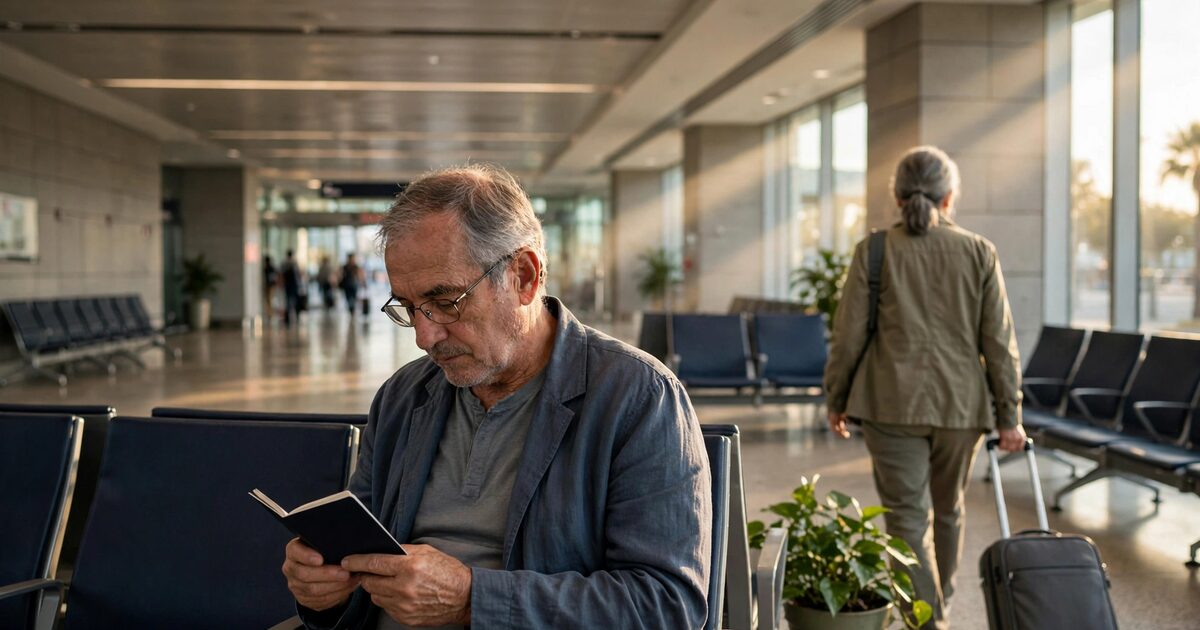
- A US visitor without permission for paid work can stay up to 180 uninterrupted days from the entry date, and the officer can grant fewer. The stamp is the deadline.
- As of November 2026 the visitor fee is 983 pesos per person. Airlines collect it on air tickets. A land stay of 7 days or less is exempt; a longer land stay pays on the way out.
- An approved overstay fine is 20 to 100 days of the UMA. At 117.31 pesos a day since 1 February 2026, that is 2,346.20 to 11,731 pesos per person.
- Regularization after a regular entry has to be filed within 60 calendar days after the authorized stay ends, and article 43 can still block it.
- Mexican tax residence follows a home and the center of vital interests, including where more than 50 percent of the year's income is sourced in Mexico. It is not the 180-day stamp.
Americans can stay in Mexico for up to 180 uninterrupted days counted from the day they enter, and only for as many of those days as the officer writes down. Article 52 of the Migration Law sets that ceiling for a visitor without permission to do paid work. As of November 2026 the entry fee on that status is 983 pesos a person, already folded into most air tickets, and an approved overstay fine runs from 2,346.20 to 11,731 pesos.
A winter lease does not move the date. Say two people fly down with tickets that already include 1,966 pesos of entry fees, then get 90 days instead of 180. The unused months of rent are the expensive part, and the fine for staying past the stamp is extra.
How long can Americans stay in Mexico?
The longest visitor stay is 180 days, counted from the entry date, under article 52 of the Migration Law. A US passport holder does not need a Mexican visa for a trip of less than 180 days, which the Mexican consulate in Omaha states in its visa requirements, and the State Department says a tourist visa is required when the visit is longer than 180 days. The National Migration Institute can grant the full 180 or a shorter stay. The number on the stamp, or on the entry permit, is the one you can use.
| How you enter | What you carry | Who sets the days | Visitor fee |
|---|---|---|---|
| Air | Passport book. A passport card alone can be refused. | The officer, up to 180 days. A stamp, or an e-gate receipt with a QR code. A digital record is generated at all 66 international airports. | 983 pesos, collected by the airline |
| Land, past about 12 miles (20 km) | Passport book. The Institute's land-form terms limit a passport card to the border strip. | The days written on the entry permit or the stamp. The ceiling is still 180. | 983 pesos, unless the whole land stay is 7 days or less |
| Land, inside about 12 miles for 6 days or less | Passport book or card | No entry permit for that short border-strip visit | The fee law waives the charge when a land stay does not pass 7 days |
Data note: the 6-day border rule is the State Department's description of when the entry permit is not required. The 7-day waiver is the fee statute. A 7-day trip past the border strip can still need the permit.

Your passport has to be valid on the day you enter. Air travelers need one blank page for the stamp. You declare cash above $10,000 on the way in and on the way out. None of that buys extra days.
What does the stamp let you do?
The status on a visa-free entry is "visitor without permission to perform paid activities." You can transit or remain for the days granted. You cannot treat the stamp as permission to be paid for work in Mexico. Tourism, an unpaid visit, and the questions an officer asks to confirm that purpose are the shape of this entry, as the Institute's own list of visa-exempt travel describes it.
Can you work on a visitor stamp?
No paid work in the country comes with this condition. Article 52 says the stay does not include activities subject to remuneration in Mexico. A separate visitor status exists for someone who already has a job offer, an invitation that pays, or seasonal paid work, and the fee schedule prices that document at 4,340.77 pesos, against 983 pesos for the unpaid visitor document. Doing work your status does not allow is its own ground for a later regularization case, with the same fine range as an overstay.
Someone who will be paid for work performed while physically in Mexico needs a status that allows that work. A temporary resident card can include permission to work for pay when there is a job offer, and it can last up to four years. The income tests and the paperwork live in the temporary residency guide. Using a tourist stamp as a quiet work permit is the expensive version of the same problem as overstaying.
What can an officer ask to see?
At the booth, the Institute says the officer can ask for a hotel reservation, return or tour tickets, how you will support yourself during the stay, where you will be, how long you plan to be there, and how you will leave. Paying a fee in advance does not guarantee they let you in. The land form says that in plain words: the payment is not an admission.
- Carry a passport book that is valid on entry day, with a blank page if you are flying.
- Have the return or onward ticket and the lodging name available, plus a way to show you can pay for the trip.
- For an air arrival, register the passport on the Institute's portal at least 24 hours before the flight if you want the digital record afterward. It cannot be created before you enter.
- On a land trip past the border strip, stop for the entry permit even if nobody waves you over, and read the days on it.
- If you are driving past about 12 miles, get the temporary vehicle import permit before you go farther. The deposit comes back when the vehicle leaves on time. Skipping the permit can mean impoundment and a fine equal to the value of the vehicle.
- Before you leave the counter, read the number. Download the digital record during the stay you were given. A grant of 180 days gives you those 180 days to download it. A grant of 30 days gives you 30.
What do you pay to enter, and what does an overstay cost?
As of November 2026, article 8 of the Federal Fees Law sets the visitor-without-paid-work document at 983 pesos. Airlines collect that amount for people who arrive by air and send it to the tax authority, so it shows up inside the ticket rather than at a desk in the terminal. A couple's tickets carry 1,966 pesos for the two entry charges.
Leaving Mexico by air adds a separate airport migration charge of 231.55 pesos under article 12 of the same law, also collected by the airline. For two people that is 463.10 pesos. The entry charge and the departure charge together are 2,429.10 pesos before any hotel or rent. Land travelers pay the 983 pesos themselves, with one exception: if they entered by land and the stay does not exceed seven days, article 11 says the fee is not charged. Cross that week and the fee is paid on the way out.
Two air tickets: 983 × 2 = 1,966 pesos to enter, plus 231.55 × 2 = 463.10 pesos to leave. Total on the tickets: 2,429.10 pesos. An approved overstay fine, per person, is 20 to 100 days of the 2026 daily reference unit: 2,346.20 to 11,731 pesos.
The fine is not a menu you pick from. Article 146 of the Migration Law still describes it as 20 to 100 days of the old Mexico City minimum wage. The Institute's regularization sheet converts that range into the Unidad de Medida y Actualización, the official reference unit. INEGI set the daily value at 117.31 pesos from 1 February 2026. Twenty days is 2,346.20 pesos. One hundred days is 11,731 pesos. The officer sets the amount inside that range at the interview. Two people at the bottom of the range pay 4,692.40 pesos. Two people at the top pay 23,462 pesos. Replacing a lost visitor document is another 983 pesos under the same fee article.
What happens after the date on the stamp?
The day after the authorized stay ends, you are past the permission you were given. If you entered regularly and you only overstayed, article 134 lets you ask to regularize, and the request has to be filed within 60 calendar days after the authorized period ends. The same article covers people who did activities their status did not allow. The Institute receives the request, interviews you, and sets the fine if it approves the case. Approval is not automatic.
Is a fresh entry an extension?
A new arrival is a new request. The land form is good for one entry, and its 180-day maximum is counted from the stamp, not from the day you printed the form. The officer on the next entry can write a shorter number, and article 43 is the refusal power if they decide you do not qualify. Interior checkpoints are common, including in tourist areas far from the border. Carry the passport and the proof of the stay you were given. The State Department notes that officers can hold you while they check status if those are missing, or if the stay has already run out.
How do the dates work on a winter rental?
Say you and your spouse fly into Guadalajara on 6 January. Count the entry date as day 1, which is how article 52 measures the period. If both stamps say 180, day 180 is 4 July. A flight home on 30 June is day 176, so that lease sits inside a full grant, with 4 July still available if a delay eats a few days.
If both stamps say 90, day 90 is 5 April. The 30 June flight is day 176, which is 86 days past the permission you were given. The 60 calendar days after 5 April end on 4 June. Waiting until the lease ends on 30 June misses that filing window by the better part of a month. The rent for May and June is then a cost you are paying in a stay the stamp does not cover, and each of you is looking at a fine somewhere from 2,346.20 to 11,731 pesos if a regularization is even still available and is approved.
Entry on 6 January, day 1. Day 90 is 5 April. Day 180 is 4 July. Home on 30 June is day 176. A 90-day stamp makes 30 June 86 days late, and the 60-day filing window has already closed on 4 June.
Book the nonrefundable months only after you have seen the number. If the counter writes fewer days than the lease, the useful move is to shorten the stay or change the ticket while you are still inside the days you were given. The couple in this example is hypothetical. It is the arithmetic of the statute, not a reported case.
When is a visitor stamp the wrong document?
Use the stamp when the whole trip, including a delay, fits inside a number an officer might actually write, and when nobody on the trip will be paid for work done in Mexico. Change documents when the plan is a year of rent, a car that stays, or work. The Institute's fee for a temporary resident document of up to one year is 11,140.74 pesos. Four years is 25,057.82 pesos. A permanent resident document is 13,578.96 pesos. Those are the card fees in article 8, revised in the official text on 7 November 2025, not the consulate's separate charges and not a promise that the application is approved.
A stay that is meant to be permanent is a different file from a winter. The peso tests for that card are laid out in the permanent residency requirements. Compare them with the 983 peso visitor fee before you sign a long lease on the strength of a stamp.
Does 180 days make you a Mexican tax resident?
The day count on the stamp is an immigration limit. Mexican tax residence is a different test. Article 9 of the Federal Fiscal Code treats you as a resident if you have established a home in Mexico. If you also have a home in another country, the question becomes where your center of vital interests sits. The code gives two examples: more than 50 percent of your income for the calendar year has its source in Mexico, or your main professional activity is in Mexico. The regulations add that occupying a place temporarily for tourism, when that center of interests is not in Mexico, is not establishing a home. A long rental plus a working life run from Mexico can land on the other side of that line. How Mexico then taxes a foreigner is the subject of the Mexico expat tax guide.
The US side does not switch off because the stamp is short. US citizens abroad are still taxed by the United States on worldwide income. A winter in Mexico does not replace a US return.
Once the dates fit, the cash question is whether a winter's rent, the 2,429.10 pesos of air charges for two, and a fine that can reach 11,731 pesos per person still leave the trip cheaper than staying home. That is the same comparison a retirement abroad budget has to survive if the winter turns into a longer move.
What to do with the number on the stamp
Check the days before you pay for the rest of the season. Leave by the date you were given, or file within 60 calendar days after it if you are already over and article 43 does not block you. If the life you want does not fit inside a visitor stamp, start the resident process while you are still outside Mexico, and keep the passport with you at checkpoints until you hold a different card.
The fees, the 117.31 peso daily unit, and the officer's discretion all move. Read the stamp you actually received on this trip, then match the lease to that number.
This is general information, not legal, tax, or immigration advice. Have a qualified professional review a lease, a work plan, or a regularization before you rely on it.
Data notes and sources checked
- Migration Law (Chamber of Deputies): article 52 on the 180-day visitor ceiling and the four-year temporary resident status, article 134 on the 60-day regularization window, article 146 on the 20-to-100-day fine, and article 43 on refusals.
- Federal Fees Law: 983 pesos for the unpaid visitor document, 231.55 pesos on international air departure, the 7-day land waiver, and the resident-card fees.
- INEGI UMA bulletin: 117.31 pesos a day from 1 February 2026. The Institute's regularization sheet applies that unit to the article 146 range.
- State Department Mexico page: passport book for air, discretion on the length of stay, 66 airports, the border zone, checkpoints, the $10,000 declaration, and the vehicle import permit.
- INM land entry form and the digital record guide: one entry, 180 natural days from the stamp, payment is not admission, and the download window matches the days granted.
- Federal Fiscal Code article 9 and the regulations article 5: tax residence follows a home and the center of vital interests, not the 180-day stamp.
- Consulate of Mexico in Omaha: US citizens do not need a visa for a trip of less than 180 days.
Frequently asked questions
Do Americans need a visa to visit Mexico?
Not for a trip under 180 days. A US passport holder can be admitted as a visitor without permission to do paid work. A tourist visa is required if the visit is longer than 180 days, and the officer can still grant fewer than 180 days.
Can the officer give me fewer than 180 days?
Yes. The Migration Law sets 180 days as the maximum uninterrupted stay from the entry date. The State Department says the National Migration Institute may grant up to 180 days or a shorter stay. The number written on the stamp or entry permit is the one that counts.
What is the fine for overstaying a Mexican visitor stamp?
If regularization under article 134 is approved, the fine is 20 to 100 days of the official reference unit. From 1 February 2026 that unit is 117.31 pesos a day, so the range is 2,346.20 to 11,731 pesos. The officer sets the amount inside the range.
Does staying 180 days make me a Mexican tax resident?
No. Article 9 of the Federal Fiscal Code looks at whether you established a home in Mexico and, if you also have a home elsewhere, where your center of vital interests is. A temporary tourist stay, with that center outside Mexico, is not treated as establishing a home.
This guide is general information, not personalized tax, legal, or investment advice. Rules change; verify current thresholds with official sources or a qualified professional before acting.
Related guides
 Retirement AbroadNovember 6, 2026
Mexico Permanent Residency Requirements
Match a pension above 133,733 pesos or a 5,378,663-peso balance, then check your consulate's dollar sheet before you book.
 Retirement AbroadOctober 20, 2026
France Long-Stay Visa Income Requirement
Show €1,477.93 net a month for France's long-stay visitor visa. Learn which pension proof counts, why work is barred, and what validation costs.
 Retirement AbroadOctober 5, 2026
Spain Non-Lucrative Visa Income Requirements
See if you clear the Spain non-lucrative visa income test: €28,800 for one person, €7,200 per dependent, and no remote work.