Brokerage Move Checklist for U.S. Expats
A pre-move brokerage checklist for U.S. expats covering country eligibility, tax forms, transfers, reporting, and account-access risk.

- U.S. citizens living abroad should generally certify brokerage tax status with Form W-9, not Form W-8BEN.
- Incorrect or missing taxpayer identification details can trigger 24% federal backup withholding on reportable payments.
- SIPC protection is up to $500,000 per customer, including up to $250,000 for cash held to buy securities, and does not cover market losses.
- Foreign brokerage accounts count toward the FBAR when aggregate foreign accounts exceed $10,000 at any time during the year.
- Qualifying single filers living abroad generally face Form 8938 thresholds above $200,000 year-end or $300,000 at any time.
Disclosure: this article contains affiliate links. If you open an account through one of them, Cashflow Abroad may earn a referral commission at no extra cost to you.
A brokerage move can turn into a five-figure liquidity problem if your firm restricts trading after learning that you live abroad. The expensive mistake is not changing the address; it is changing it before you know whether the destination, account type, funds, margin balance, and backup broker all work together.
This checklist is for U.S. investors preparing to relocate, especially operators who cannot afford to lose access during a move. Retirees should focus on distribution access and beneficiaries; families should also test joint-owner access. For the broader investing framework, see our Investing & Wealth Building hub.
What should you do before changing your brokerage address?
Get the firm's answer in writing before changing your profile: ask what happens to each account type and each holding for a resident of your destination country. An account can remain open while purchases, options, margin, mutual funds, or deposits become restricted.
Ask the broker five account-specific questions
- Can an existing U.S. citizen client keep this exact taxable, IRA, Roth IRA, trust, joint, or entity account while legally resident in the destination?
- Will the account remain fully tradable, become sell-only, or lose access to mutual funds, options, margin, cash sweeps, cards, checks, or new deposits?
- Which residence documents are required, and how quickly must an address or tax-residency change be reported?
- Can every current security transfer in kind to the proposed backup broker?
- Which tax form and year-end statements will the firm issue after the change?
Save the representative's name, date, case number, and exact wording. A verbal assurance is useful for planning, but the account agreement and compliance review control the result.
Inventory accounts and holdings
Export a current statement, cost-basis report, tax lots, beneficiaries, recurring transfers, linked banks, margin terms, and open orders. Record fractional shares separately because the SEC warns that they generally cannot transfer to another firm and may have to be sold.
Also flag proprietary mutual funds, money-market sweep positions, options, low-priced securities, and assets traded outside the United States. These are more likely than ordinary U.S.-listed stocks to require liquidation, manual transfer, or special permission.
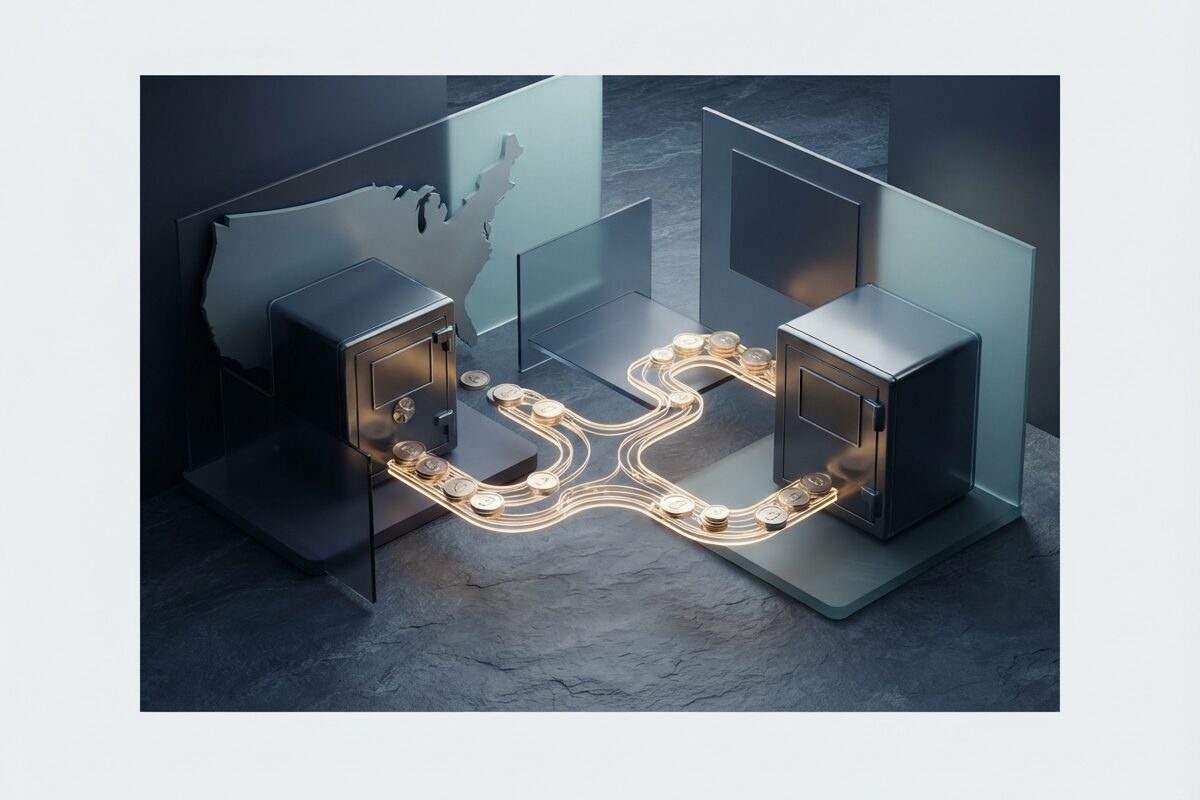
Which brokerage risks matter most when moving abroad?
The practical risks are not interchangeable. Country eligibility determines whether the relationship can continue, while asset portability determines whether you can move without creating a taxable sale.
A forced sale of a $120,000 position with a $70,000 tax basis realizes a $50,000 capital gain before any tax-rate, loss-netting, or currency analysis.
| Risk | Evidence to collect | Potential cash-flow effect | Mitigation |
|---|---|---|---|
| Destination not supported | Written eligibility confirmation | Trading or account restrictions | Open and test a compliant backup before departure |
| Asset cannot transfer | Receiving firm's asset review | Taxable sale, spread, or time out of market | Consolidate or replace deliberately before moving |
| Wrong tax certification | W-9 or other status confirmation | Possible 24% backup withholding | Correct name and TIN before distributions |
| Foreign brokerage reporting | Account location and peak balance | FBAR/Form 8938 compliance burden | Track maximum values and statements from day one |
| Security access failure | Tested MFA and recovery path | Delayed trades or withdrawals | Use durable authentication and a trusted contact |
Data note: rules and provider terms were checked in August 2026. Confirm destination eligibility again immediately before moving.
Country eligibility is not a logo test
A broker advertising international service does not necessarily serve every country or offer every product there. Charles Schwab's international application begins with country or region of residence and requires a passport or government ID, proof of residence, and a Social Security or Tax ID number for a U.S. citizen. Its site also publishes a restricted-country result for places where it cannot accept applications.
Sanctions are another layer, not a simple banned-country list. The U.S. Treasury's OFAC program page says programs can be comprehensive or selective, and OFAC explains that it does not maintain one universal list of countries U.S. persons cannot do business with.
Protection does not cover market losses
SIPC states that protection at a member broker is up to $500,000 per customer, including up to $250,000 for cash held to buy securities, if the broker fails. It does not insure investment value or prevent a policy restriction after an overseas move.
Verify the legal entity that will carry your account after relocation and check its regulator and protection regime. A familiar trading interface can sit above a different entity in another jurisdiction.
Do U.S. citizens use Form W-8BEN after moving abroad?
No. A U.S. citizen remains a U.S. person for this certification even when living overseas; the IRS instructions for Form W-8BEN say U.S. citizens should use Form W-9 instead.
Why name and TIN matching matters
The IRS lists a 24% backup-withholding rate when a payee fails to provide a taxpayer identification number correctly, is reported with an incorrect TIN, underreports interest or dividends after required notices, or fails to make the required certification. Check that your legal name and Social Security number match IRS records before the move.
Backup withholding is a prepayment that may be claimed on a return, but losing 24 cents of every affected dollar until the problem is corrected can disrupt withdrawals. Keep copies of the submitted certification and any confirmation.
When a backup broker creates foreign reporting
If the replacement account is maintained outside the United States, it can add reporting even when it holds U.S. securities. FinCEN's FBAR guidance says a U.S. person generally files when the aggregate value of foreign financial accounts exceeds $10,000 at any time during the calendar year; securities and brokerage accounts are included.
Form 8938 is separate. The IRS FATCA threshold summary says a qualifying taxpayer living abroad who is single or married filing separately generally crosses the threshold above $200,000 on the last day of the year or $300,000 at any time. For joint filers living abroad, those figures are $400,000 and $600,000. Facts such as whether you must file a return and whether you satisfy the IRS living-abroad test matter, so check the complete instructions.
Should you transfer the account before or after moving?
Transfer before moving when the destination could restrict the existing account or complicate opening the replacement. Transfer after moving only when the receiving firm has confirmed eligibility and the new residence documentation is required to open the correct account.
Receiving account approved + funding tested + assets accepted should come before the old account is restricted or closed.
Use the receiving firm to start the transfer
FINRA's account-transfer guidance says the customer submits a Transfer Initiation Form to the receiving firm. Most common domestic assets move through the NSCC Automated Customer Account Transfer Service, while assets that cannot use ACATS may require a slower manual process.
Match the account registrations exactly. Resolve margin loans, open orders, unsettled trades, and option positions before submitting. Ask both firms about transfer-out, closing, custodial, wire, and conversion fees; the SEC notes that these account-level fees vary.
Do not liquidate by default
An in-kind transfer generally moves eligible securities without selling them. Selling everything may accelerate gains, interrupt a strategy, and create repurchase timing issues. Get a security-by-security acceptance list from the receiving broker first.
If a holding is not portable, compare three choices: keep it in a permitted restricted account, exchange it before the move, or sell it with tax planning. For a deeper comparison of firms and restriction outcomes, use our recent guide to expat brokerage account closures.

A 30-day brokerage move plan
The safest plan creates redundancy before any compliance event. Start while you still have reliable access to your U.S. phone, mailing address, bank links, and identity documents.
Days 1–10: verify and document
- Tell both firms the exact destination, citizenship, account types, holdings, and planned residence-change date.
- Download statements, realized gains, cost basis, tax lots, beneficiary records, and account agreements.
- List fractional shares, proprietary funds, options, margin, recurring investments, and linked payment instructions.
- Confirm whether Charles Schwab or another destination-eligible firm can serve as the primary or backup; verify current terms directly.
- Add a trusted contact where appropriate, without giving that person trading authority.
Days 11–20: build and test the backup
- Open the correct account under truthful current-residence information.
- Send a small cash transfer in and out; confirm currency conversion, withdrawal, and authentication.
- Test password recovery without relying on a single U.S. mobile number.
- Ask the receiving firm's transfer desk to pre-review every asset.
- Keep enough cash outside the brokerage for at least one full billing cycle and your relocation expenses.
Days 21–30: transfer and reconcile
- Cancel or document open orders and wait for trades to settle.
- Submit the transfer through the receiving firm and monitor exceptions daily.
- Compare shares, tax lots, cash, and cost basis after arrival.
- Download the final old-firm statement and preserve secure-message records.
- Update the legal residence and tax profile on the timeline each firm requires.
How should operators, retirees, and families adapt?
Operators should separate business operating cash from long-term investments and test an emergency transfer route. Retirees should confirm IRA distributions, withholding elections, required minimum distribution workflows, and the bank account that will receive cash.
Advanced operator controls
Maintain a one-page account map showing custodian, legal entity, jurisdiction, protection regime, tax form, beneficiaries, authentication method, and transfer destination. Review it after every country move and once each year.
Do not mask your location or leave a stale residence address to preserve features. That can create compliance, tax-document, and account-access problems at exactly the moment you need liquidity.
Conclusion
The durable brokerage setup is not the firm with the loudest international marketing. It is the one that confirms your destination, accepts your holdings, preserves correct U.S. tax status, and gives you a tested transfer path before the move.
Data notes / Sources checked
The August 2026 review checked the provider account documentation described above, FINRA customer-transfer guidance, SEC fractional-share guidance, SIPC FAQs, IRS backup-withholding guidance, FinCEN FBAR guidance, and OFAC sanctions program information. Provider eligibility, fees, sanctions, and tax rules can change.
Frequently asked questions
Can a U.S. citizen keep a brokerage account after moving abroad?
Sometimes, but eligibility depends on the destination, account type, holdings, and broker policy. Get written confirmation for your exact facts before changing your address.
Should a U.S. citizen abroad submit Form W-8BEN?
Generally no. IRS instructions say a U.S. citizen remains a U.S. person even while residing abroad and should use Form W-9 to document that status.
Does a foreign brokerage account need to go on the FBAR?
Generally yes when the aggregate maximum value of all reportable foreign financial accounts exceeds $10,000 at any point during the calendar year.
Should I sell investments before transferring brokers?
Not automatically. Ask the receiving broker to pre-review each asset; an in-kind transfer may avoid realizing gains, while fractional or proprietary positions may require sale.
This guide is general information, not personalized tax, legal, or investment advice. Rules change; verify current thresholds with official sources or a qualified professional before acting.
Related guides
 Investing & Wealth BuildingAugust 20, 2026
Charles Schwab for Expats: Move-Proof Your Account
Move abroad without losing brokerage access. Verify Schwab eligibility, protect cash access, and prepare a transfer-ready backup plan.
 Expat Tax & FinanceAugust 16, 2026
Change Your Brokerage Address Before Moving
Use this expat brokerage address change checklist to protect account access, preserve tax lots, and transfer investments without forced sales.
 Investing & Wealth BuildingJune 17, 2026
Interactive Brokers for US Expats: What You Need to Know
IBKR accepts US citizens in 200+ countries. Learn which entity to choose, FBAR rules, and which investments trigger PFIC penalties when living abroad.