Argentina Expat Guide: Why Dollars Go Further in Buenos Aires
Buenos Aires offers quality urban life at $1,200–$1,600/month after Milei lifted currency controls. Here is what US expats actually pay—and the visa and tax playbook.
US expats can live well in Buenos Aires for $1,200–$1,600/month. Visa options, tax rules, banking, and neighborhoods explained.
Disclosure: this article contains affiliate links. If you open an account through one of them, Cashflow Abroad may earn a referral commission at no extra cost to you.
In April 2025, Argentina did something no one expected: it scrapped the cepo cambiario — the currency controls that had trapped dollars inside the country for years. Overnight, individuals could buy U.S. dollars without restriction and freely move money abroad. Inflation, which had topped 211% annually in 2023, cooled to 1.5% per month by June 2025, a five-year low. And a single American with $1,500/month to spend suddenly found themselves living like royalty in one of South America's most sophisticated cities.
Buenos Aires has always been the Paris of Latin America in spirit — broad avenues, world-class steak, European architecture, and a culture that takes coffee and conversation seriously. What's changed is the math. The economic chaos of the last decade made Argentina a polarizing expat destination, but Milei's shock therapy is rewriting that calculus. For US dollar earners, Argentina in 2025 is one of the highest-leverage moves on the board.
What Life Actually Costs in Buenos Aires
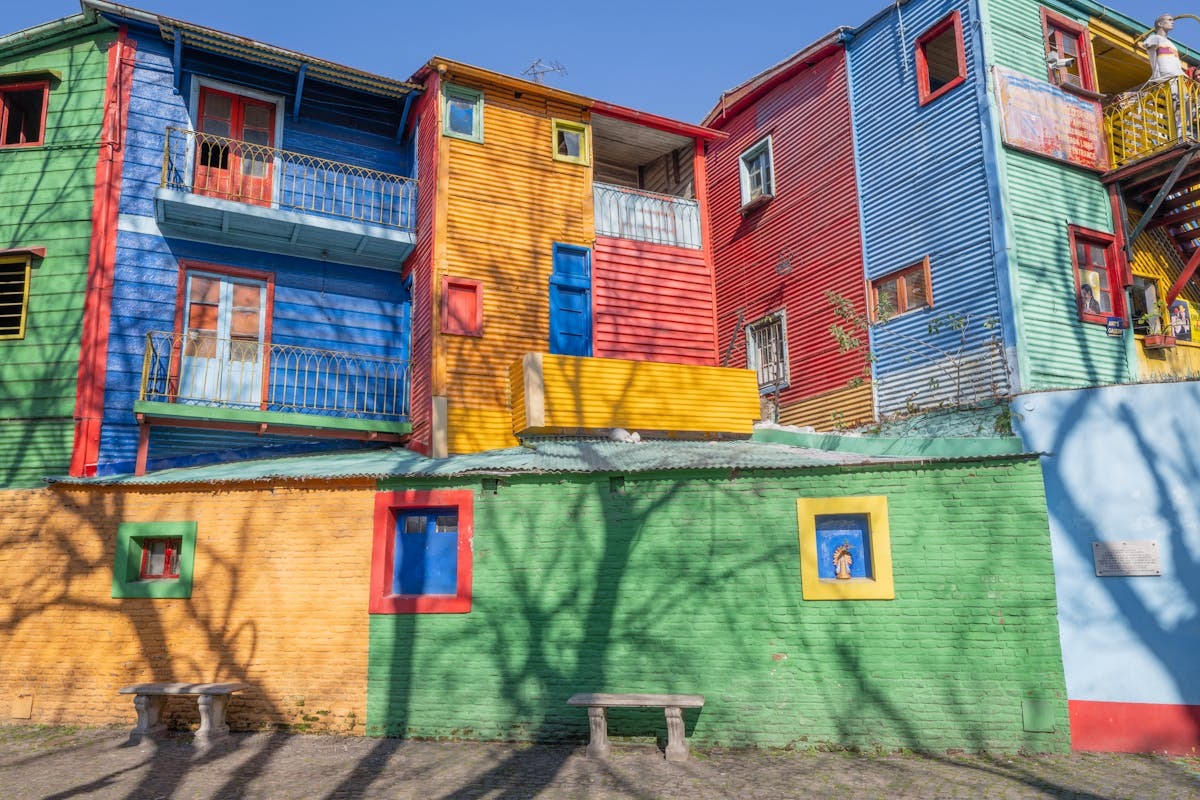
Buenos Aires neighborhoods vary enormously. Palermo is the expat hub — leafy, walkable, full of co-working spaces and rooftop bars. San Telmo is gritty, artsy, and cheaper. Recoleta offers old-money elegance at mid-range prices. Your lifestyle costs depend almost entirely on where you land.
| Category | Budget | Mid-Range | Comfortable |
|---|---|---|---|
| Rent (1BR, unfurnished) | $400–600 | $700–1,000 | $1,100–1,600 |
| Groceries | $150–200 | $200–280 | $280–400 |
| Eating out (local) | $80–120 | $150–250 | $300–500 |
| Utilities + Internet | $60–90 | $80–110 | $100–150 |
| Transport (Subte + bus) | $20–30 | $40–60 | $80–120 |
| Monthly Total | ~$800 | ~$1,200 | ~$1,900 |
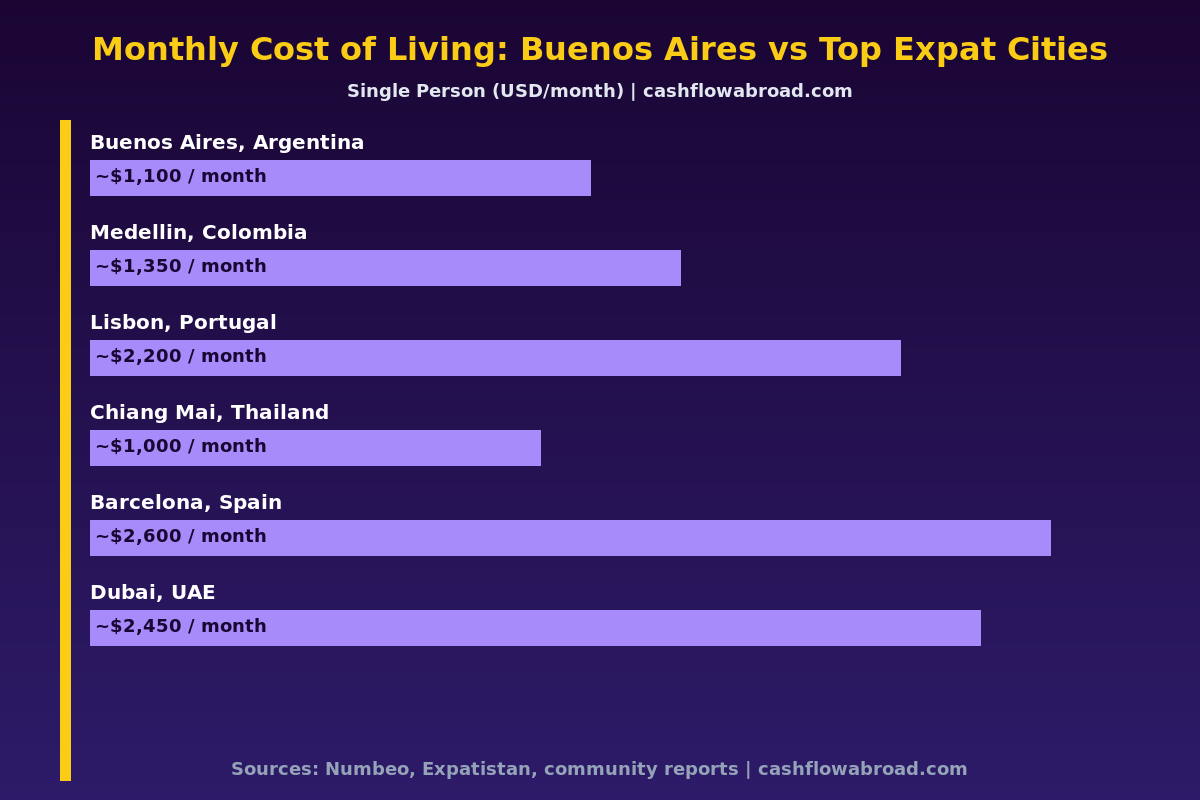
A quality furnished one-bedroom in Palermo runs $850–$1,050/month, utilities and Wi-Fi often included when renting to expats. Internet packages average $20–30 USD at current exchange. A parrilla dinner with wine rarely exceeds $25 USD. A gym membership costs under $30. These numbers would be laughable in Lisbon or Barcelona, where the same lifestyle costs 2–3x more.
Compare that to other geographic arbitrage destinations: Chiang Mai comes in around $1,000/month but lacks the urban infrastructure and cultural density. Medellín runs $1,200–$1,500. Lisbon is now firmly a $2,200+ city. Buenos Aires sits in a sweet spot — more sophisticated than Southeast Asia, significantly cheaper than Europe.
How to Live in Argentina Legally
Argentina gives you multiple legal pathways, depending on your income source and long-term intentions.
Tourist Stay (90 days, extendable)
US citizens enter Argentina visa-free for 90 days. You can extend once in-country for another 90 days through an official prórroga at the immigration office. Many short-term nomads also do a quick border hop to Uruguay (Colonia del Sacramento, a $50 ferry ride from Buenos Aires) to restart the clock, though immigration has been tightening enforcement on obvious visa runs.
Digital Nomad Visa (up to 360 days)
Argentina's Digital Nomad Visa, introduced in 2022, is technically a residencia transitoria good for 180 days, extendable once for another 180 — totaling a full year. Requirements: proof of consistent remote income from outside Argentina, including pay stubs, employment contracts, invoices, or bank statements showing ongoing foreign payments. There's no stated minimum income, but immigration wants to see stable, verifiable earnings. The critical catch: transitional residency does not count toward the two-year clock for permanent residency or citizenship. For visa-stacking strategies and comparisons, see our digital nomad visas ranked guide.
Rentista Visa (passive income holders)
If your income comes from dividends, rental income, or other passive sources, the Rentista Visa gives you one year of residency, renewable up to three years, with a path to permanent residency after two years. The income threshold is roughly five times the Argentine minimum wage — approximately $1,400–$2,000 USD/month as of 2025. You'll need apostilled documents, a clean criminal record, and proof of income translated into Spanish. This visa does count toward citizenship.
Pensionado Visa (retirees)
Nearly identical to the Rentista, but your income source must be a recognized pension or retirement fund — Social Security qualifies. Same $1,400–$2,000/month income requirement, same residency timeline to permanent status. For anyone drawing SS benefits that meet the threshold, this is the cleanest route. See the deeper breakdown in our retirement abroad guide.
Citizenship by Investment (new as of July 2025)
Milei's Decree 524/2025 created a formal citizenship-by-investment pathway that can waive the traditional two-year residency requirement entirely for qualifying investors. Details are still being operationalized by the government, but this signals a major shift — and potentially the fastest route to an Argentine passport ever available.
The US Tax Picture in Argentina
Argentina's tax system has a clear tripwire: the 12-month rule. Spend fewer than 12 consecutive months and you're treated as a nonresident — taxed only on Argentine-source income, which for a remote worker earning from foreign clients is effectively zero. Cross that threshold and you become an Argentine tax resident with worldwide income obligations, including a progressive scale that tops out at 35%.
Most Digital Nomad Visa holders stay under 12 months or maintain their transitional residency status, which provides a degree of shelter from Argentine income tax on foreign-source income. That said, Argentina's tax authority ARCA — which replaced AFIP in late 2024 after Milei dissolved the agency and cut over 3,000 positions — is still adapting to the new legal framework.
On the US side, nothing changes. You still file a US return. If you qualify for the Foreign Earned Income Exclusion, you can shield up to $126,500 (2024, adjusted annually) of foreign earned income from US federal tax. The FEIE requires either the Bona Fide Residence Test or the Physical Presence Test (330 full days outside the US in a 12-month period).
Argentina's wealth tax, Bienes Personales, applies a non-taxable minimum of ARS 384,728,044 (~$370,000 USD at current rates) for the 2025 period. Most expats with foreign assets held in foreign accounts won't come close to that threshold in Argentine-assessed terms.
Banking and Money in Argentina
Opening a traditional Argentine bank account as a US citizen is genuinely difficult. FATCA compliance has made Argentine banks risk-averse about US-person accounts. Santander Argentina and BBVA will technically accept foreigners with a DNI (national identity document), but obtaining a DNI requires legal residency and can take months to process.
The practical expat stack:
Charles Schwab International handles your USD anchor — unlimited ATM fee reimbursements worldwide, no foreign transaction fees, and a brokerage account accessible from any country. Argentine ATMs (Banelco and Link networks) dispense pesos; Schwab reimburses the ATM fee automatically.
For dollar management inside Argentina without the traditional banking friction, ARQ Finance was built for exactly this situation. It holds balances in USDc and EURc, lets you swap to ARS at competitive rates, accepts USDC/USDT deposits from external wallets, pays up to 4% on dollar balances, and issues a Mastercard with cashback. For expats who need dollar stability with peso spending capability in a market that's still rebuilding trust in its currency, ARQ solves the problem cleanly. It operates in Argentina, Mexico, Colombia, and Brazil.
For sending money or receiving client payments internationally, Remitly offers transparent fees and competitive USD-ARS rates.
Where to Live: Buenos Aires Neighborhood Breakdown
| Neighborhood | Vibe | Rent (1BR) | Best For |
|---|---|---|---|
| Palermo | Trendy, green, expat-heavy | $800–$1,200 | Digital nomads, social scene |
| San Telmo | Bohemian, historic, raw | $500–$800 | Artists, budget-focused expats |
| Recoleta | Elegant, quiet, European feel | $900–$1,400 | Professionals, retirees |
| Belgrano | Family-friendly, residential | $700–$1,000 | Long-term expats, families |
| Villa Crespo | Up-and-coming, artsy | $600–$900 | Value seekers, remote workers |
Palermo is where most digital nomads land first — co-working spaces every few blocks, English-friendly cafés, and a rooftop bar scene that makes networking easy. Villa Crespo sits just west and offers similar infrastructure at noticeably lower rents; it's where savvy Palermo expats move after the first year. Recoleta's European-streetscape and walkability make it a retiree favorite, while Belgrano draws families drawn to its calmer pace and proximity to international schools.
Healthcare: Good and Cheap by US Standards
Argentina has a tiered system. Public hospitals are technically free but chronically underfunded. Private healthcare is a different story — world-class by Latin American standards, and still a fraction of US costs.
A prepaga (private health plan) from providers like Swiss Medical, Medicus, or Galeno runs $100–$200 USD/month for a single adult, covering specialist visits, emergency care, and hospitalization at private hospitals. Getting enrolled without a DNI is possible but requires patience with paperwork.
For expats on Digital Nomad visas or shorter stays, international health coverage from SafetyWing ($45–$100/month depending on age and plan) often makes more sense — it covers emergency medical globally and can be maintained across countries. Full comparison of expat insurance options in our expat health insurance guide.
Keeping Your US Financial Life Intact
Argentina's time zone (ART, UTC-3) works well for US-based clients — you're only 2–3 hours behind the East Coast, which beats Southeast Asia for synchronous collaboration. But you'll still need a reliable US address for IRS correspondence, banking, and state domicile.
A virtual mailbox like Traveling Mailbox gives you a real US street address in 50+ cities, mail scanning, and check deposit capability for $15/month — essential for maintaining US bank accounts, credit card relationships, and ensuring the IRS knows where to reach you. More detail in our virtual mailbox expat guide.
Who Buenos Aires Is Actually For
Not everyone. Argentina's political risk remains real. The country has defaulted on sovereign debt nine times in its history, and while Milei's reforms have stabilized the economy faster than most economists predicted, the structural vulnerabilities haven't disappeared. If you're parking long-term capital in peso-denominated assets or Argentine real estate, the risk profile demands serious due diligence.
Buenos Aires makes exceptional sense for:
- Dollar-income remote workers who want European-grade urban life at $1,200–$1,600/month all-in
- Retirees drawing Social Security or a pension ($2,000+/month) who want real healthcare infrastructure, cultural richness, and 70% lower costs than Western Europe
- Digital nomads doing a 6–12 month stint exploring South America — Buenos Aires is an unmatched base for the region
- Passport seekers — Argentine citizenship after two years of legal residency is one of the most accessible second-citizenship paths in the Western Hemisphere, with Italian heritage treaties offering an EU gateway for qualifying applicants
Harder sell for families with school-age children (Lincoln International School runs $12,000–$18,000 USD/year) and for anyone who needs zero macroeconomic uncertainty as a baseline condition.
The Bottom Line
Buenos Aires in the post-Milei stabilization era offers one of the better dollar-to-lifestyle ratios available to US expats. Quality urban life at $1,200–$1,600/month, with access to first-rate private healthcare, a rich cultural calendar, excellent beef and wine, and a time zone that keeps you tethered to US business hours. Visa pathways are manageable. The path to citizenship is real. The currency controls are gone.
The political volatility is real too, and Argentina's economic history demands respect. But for dollar earners spending locally, the math hasn't looked this good in a long time. Get in, keep your dollars offshore, spend pesos locally, and let the leverage work for you.
Financial Disclaimer: This post is for informational and educational purposes only and does not constitute tax, legal, or financial advice. Tax laws in both the US and Argentina change frequently. Consult a qualified tax professional and licensed immigration attorney before making decisions about residency, visa status, or financial arrangements. ARQ Finance is not an investment advisor. Past economic conditions in Argentina are not indicative of future stability or results.
This guide is general information, not personalized tax, legal, or investment advice. Rules change; verify current thresholds with official sources or a qualified professional before acting.
Related guides
 Geographic ArbitrageJune 1, 2026
Argentina for US Expats: Costs, Visas, Banking
US dollar earners can live comfortably in Buenos Aires for $1,500/month. Complete guide to Argentina visas, banking, taxes, and healthcare for US
 Geographic ArbitrageApril 30, 2026
Argentina Expat Guide: Dollar Income, Peso Prices
Live comfortably in Buenos Aires for $1,500/month. Full guide to cost of living, tax rules, residency visas, and banking after Milei's 2025 reforms.
 Geographic ArbitrageJune 29, 2026
Bali for US Expats: Monthly Costs and Permit Guide
How much Bali costs, which Indonesian stay permit suits long-term stays, and what US citizens owe the IRS while living there in 2025.